
I’ve realized that, as a “bleeding heart,” “tree-hugging” progressive, I never imagined empathy itself would come under direct fire as it has today. But this reaction, while shocking, does make a measure of sense, because empathy is at the heart of the political divide. Yet we should not just see it as yet another good-versus-evil narrative and move on. There is a lot here to ponder and reassess.
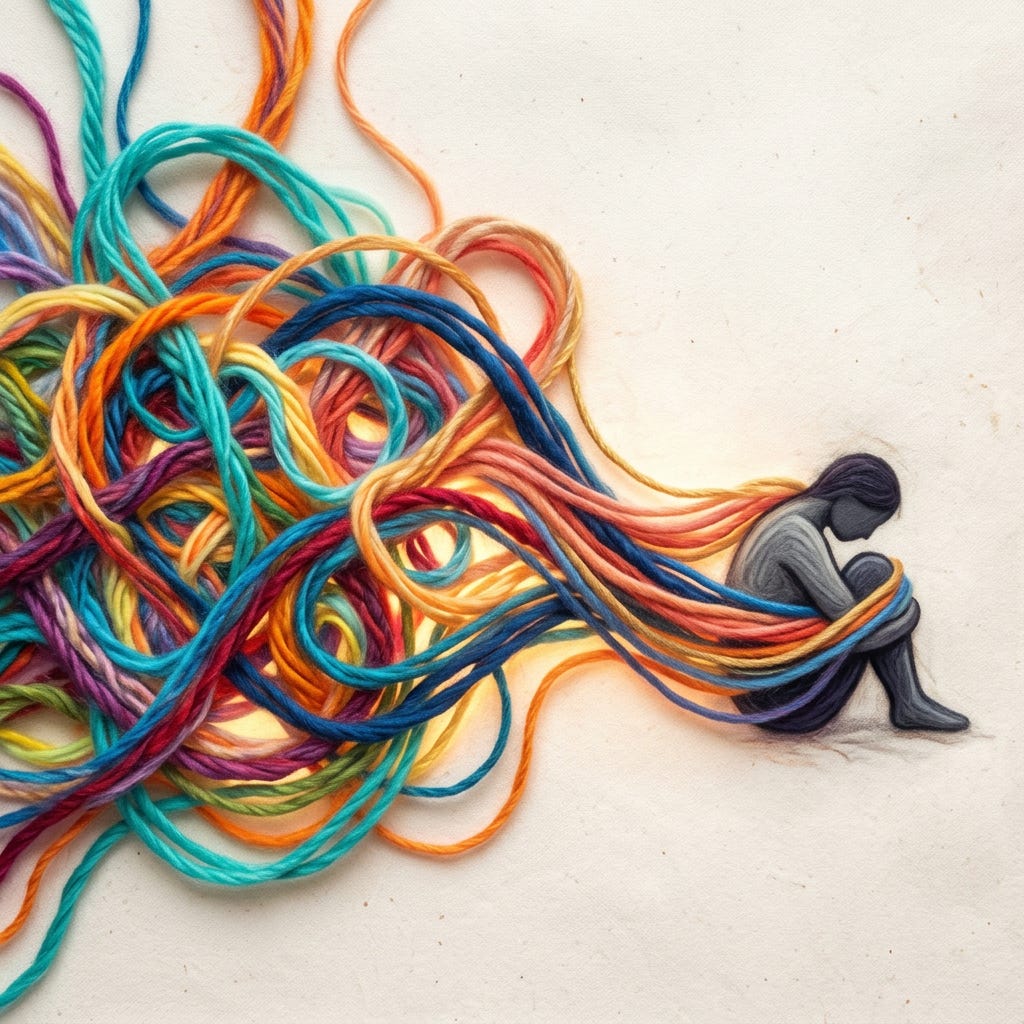
I probably don’t have to convince you that this new assault on empathy is maladaptive and leads to injustice and suffering, and that we should not simply tolerate it out of some misguided moral duty. But if we just leave it at that, if we do not consider why a war on empathy is taking root, we will miss a great opportunity.
Oh yes, let’s start with that paradox-of-tolerance thing: If we believe empathy is fundamental to human flourishing, should we then have empathy toward those who see empathy as toxic?
This is only a conundrum if empathy, usually defined as a feeling, is the only thing that matters—if we see it in isolation from our broader mental landscape. Most of us have great empathy for tigers; that does not mean we would sneak into the zoo in the middle of the night and free one. We are also rational beings with lived experience. There is hope here for greater clarity and for us to grow personally and as a community. We can start by bringing a measure of objectivity and analysis to just what we mean by empathy.
“Toxic or suicidal empathy” is the claim that caring too much for those who are distant, either physically or emotionally, is a threat to the fabric of society. In this view, empathy weakens communities and distorts judgment. To care too much about migrants, prisoners, civilians in war zones, or people on the margins of society is actually harmful because it undermines our duties and obligations to those closest to us.
Always remember that the greatest deceptions incorporate truth, and there is some truth in this view that we must consider.
The traditional way we see empathy, mostly in face-to-face interactions, is and will always remain a vital human capacity. To feel someone else’s pain. To recognize something of myself in them. To feel moved to help. This grounds friendship, family, neighborliness, and care. Hence there is value in most readily empathizing with those we can see, those whose stories are familiar, those who resemble us, or those whom our culture has already taught us to regard as innocent and fully human.
And if something stands in the way of that, it’s a problem. A larger, more abstract form of feelings-based empathy may at times do just that.
The Shadow Side
We have all seen how the story of a child caught in a disaster can touch the hearts of millions. Yet the suffering of thousands of children who die gradually from malnutrition, polluted water, heat, war, or preventable disease remains invisible. Our moral perceptions are structured to respond to the immediate and recognizable while overlooking the systemic and distant.
We know that tribalism now works against survival, and so does an empathy that limits itself to feelings alone. Empathy evolved in a world where the reach of most human action was local, societies were smaller and less connected, and survival depended heavily on group cohesion. It became one foundation of our social lives, an adaptive evolutionary mechanism.
But that’s not the society we live in any longer. All of humanity has become fundamentally interconnected. We share the same fate within a world that is vastly larger and more complex. It is true that a moral obligation only to those like us, close to us, or deemed deserving or useful opens the door to injustice and is maladaptive for our species. It is also true that for empathy to function at scale, it must evolve beyond feelings alone to fit the modern world.
And yes, I dare say it: empathy can be “toxic.” Empathy can be used as a tool of power.
One of the key things we should learn about life is that everything has a shadow. And there is a side to empathy that can indeed be destructive. It can be manipulated. A vivid story pulling at the heartstrings has the power to persuade people to do evil. Empathy helps us identify with community, but when combined with fear of others it can lead to atrocity.
We have all seen the memes. Immigrants kill Americans—don’t you care? Abortions kill babies—how can you just stand by?
The truth is, another person’s inner life, their history and life experiences, their social identities, cannot be reduced to “I know how you feel.” Empathy can also be a performance, something we act out for social purposes. And that has a cost. It can feel patronizing and even dismissive. It can also lead to limited and false understandings.
Universal rights cannot depend on the ability to imagine ourselves into another’s shoes.
Rights cannot rest on emotional identification alone, because emotional identification is unstable, local, and easily captured by tribal narratives. If I need to feel that a refugee, prisoner, political opponent, disabled person, or stranger is “like me” before I grant them moral consideration, their rights remain conditional.
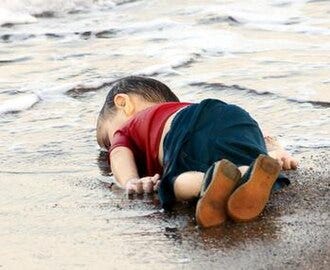
It is true that the ordinary acts of daily life connect us to people we will never meet. When we see an image such as that of Aylan Kurdi, the young Syrian boy whose body washed ashore in 2015, we can be motivated to help. But that’s not enough to match the world we live in.
Our consumption is woven into supply chains spanning continents. Our political choices affect migrants, allies, rivals, and future generations. Carbon released in one place alters weather, food systems, coastlines, and disease patterns elsewhere. Financial decisions, software systems, wars, trade agreements, and social-media narratives move through networks whose consequences are rarely visible at the point of action.
We need to abstract, to use our faculties of reason, to extend empathy beyond the tribe—that is, to establish a cognitive form of empathy. But this too isn’t enough. An abstract notion of universal empathy can lead to neglect of nearby responsibilities while we perform concern for a suffering world.
To wield empathy as a political slogan isn’t the answer either.
Reimagining Empathy
If we try to make sense of this assault on empathy, there is an opportunity for us to mature in our thinking. We either need to say empathy alone isn’t enough, and/or reimagine what the world requires of us when we try to be empathic. The trick is to see empathy not as one thing, but as an umbrella term for a family of capacities, and then to discern which of those qualities combine best to address our social and political needs.
At one end is affective resonance: feeling something of another person’s fear, grief, joy, or pain. But it is often selective, applied most readily to people who are familiar, resemble us, or have been narratively presented in ways that invite identification.
Then there is cognitive empathy: understanding another person’s perspective. But a good interrogator, propagandist, con artist, or military strategist may also understand another’s mind, and when detached from ethical concern, that understanding can be used to manipulate.
There is also projective empathy: “I know how I would feel in that situation, therefore I know how you feel.” While this can be generous, it can also erase difference and rely on static social categories and assumptions of common experience.
The more ethically mature form may be relational empathy. Or call it compassion, if you like. It does not claim full access to another’s inner life, but recognizes that they have one. It then asks us to act accordingly: to listen well and allow that recognition to constrain the power we exercise over them.
Compassion says, “I cannot entirely know your experience, but your vulnerability and dignity make moral claims on me.”
Human power has become planetary. Our moral imagination needs to catch up. We should either reimagine empathy or stop expecting too much from it. Human beings have limited attention, limited emotional bandwidth, and concrete responsibilities to the people nearest to them. A parent’s special obligation to a child is not a moral failure. Nor is loyalty to a community inherently tribal.
So what does a more mature empathy look like? What we need is not so much an expansion of sentiment as an evolution of moral perception that says:
“Your experience is not mine, and I may never fully understand it. But I recognize that you are a being with an inner life, needs, vulnerabilities, relationships, and dignity, and my responsibility to you is to make sure your dignity and rights are preserved nonetheless.”
It is not empathy alone we must reimagine, but how it fits into the broader scope of civilization. If human empathy resides in categories of sameness, why not also challenge the categories themselves and see people as participants in relationships instead?
File Cabinet Empathy
Institutions shape and guide civilization. They are themselves abstractions of the human experience, ways of organizing memories, emotions, and cognition at scale. And as such, we have done this with empathy as well, codifying moral concern through rules and laws.
What are the results?
Bureaucracy literally means rule by the desk: reality is stored in categories, in folders. And yet the refugee is not merely an “illegal,” a “victim,” or a number. The worker is not simply a labor cost. The prisoner is not reducible to a crime. The poor person is not an economic failure. The forest is not merely timber. A future child is not an abstraction whose interests can be discounted because they cannot vote, purchase, protest, or speak.
It is not that categories have no purpose, nor are they inherently evil. We need them to identify patterns, document inequality, organize social knowledge, and name injustice. A category can enable solidarity: women identifying sexism, disabled people identifying structural exclusion, workers identifying a shared relation to power.
When systems organize through categories that then harden into final verdicts, those categories stop being treated as partial maps. They become instead the reality of the persons within them, defined by the system before us. That reduction itself leads to conditional empathy—we base our feelings on the box someone belongs in and what that box supposedly tells us they deserve. Once we have the boxes set, we need not ask what this person has lived through, what relationships shaped their choices, or what obligations bind us.
The deeper problem with much of the rhetoric around toxic empathy comes from this box mindset. This assault on empathy resonates with people not only because of our tribal human heritage, but because of the ways modernity has organized and fragmented the human condition through nationalism, class, colonialism, racism, and other systems of classification. That legacy endures both culturally and institutionally.
The toxic-empathy rhetoric isn’t just tribal; it also arises from this history of classification. It implies that care for people outside one’s immediate circle is a weakness, a manipulation, or a betrayal of one’s own group. That logic has shaped much of the structure of our world, from nation-states to megacorporations.
Why not expand the group?
And in fact, that’s one pattern we can see through the history of human civilization: repeated expansions of the moral community to progressively larger scales. Modernity both reified and challenged tribalism through this expansion. Colonialism and slavery helped formalize modern racial classifications, even as modern political movements increasingly articulated universal claims about human equality and rights.
Can we take empathy all the way to the whole of the human family? I believe we must try, because interdependence is not an idealistic belief. It is a condition of reality.
The alternative to “toxic empathy” is not blind, universal empathy. It is, broadly put, relational discernment. A mature empathy, if there is to be one, asks not just, “Whom do I feel for?” but also, “What systems are producing suffering?”
This kind of empathy is challenging and uncomfortable because it expands our moral responsibility beyond what we can feel directly, while still maintaining and nurturing those feelings. It relies on a broad spectrum of feeling and reason. It asks us to care deeply about the slow and chronic violence across the world, not just what we feel through our intimacy with others like us and around us.
Can we confront the pollution that shortens lives without needing a dramatic image to do it? Can we create systems of care for refugees without a picture of a limp, drowned child? Can empathy relate to degrading soil that will make future food less secure, or the loss of a community’s economic base? Can it challenge the bureaucratic classification that denies a person housing, safety, care, or legal standing?
Perhaps empathy, more wisely understood, is a civilization’s capacity to perceive human relationships in ways that restrain and reimagine power—so that power might be distributed, shared, and directed toward healing ourselves and this planet.
Whatever we ultimately decide to do—recognize the limits of empathy or expand the concept itself—this is the time to do it.
The distinctions you make here are so important. I have felt you circling this the last couple of times we spoke; it's really great to see it spelled out.